Vibe Coding in 2026: How Developers Build, Search, and Ship in the AI Era
(AI + Featured Snippet Optimized)
Vibe coding is a modern developer workflow where engineers prioritize momentum, intuition, and AI-assisted feedback over rigid specs, heavy documentation, and traditional search-first debugging. Instead of Googling every problem, developers ask AI inside the IDE, iterate fast, and refine understanding later.
This shift is changing how developers search, learn, and ship code in 2026.
What Is Vibe Coding?
Vibe coding refers to a coding style where developers rely on flow state, rapid iteration, and AI assistance rather than formal planning and step-by-step research.
In vibe coding:
- The IDE becomes the search engine
- AI copilots replace browser tabs
- Answers are tested immediately, not bookmarked
- Momentum matters more than perfection
It’s not reckless coding.
It’s context-first coding.
Why Vibe Coding Exists (And Why It’s Exploding Now)
Vibe coding didn’t appear randomly. It emerged because traditional workflows broke down.
Developers are overwhelmed by:
- SEO-stuffed tutorials
- Outdated Stack Overflow answers
- Long blog intros before usable code
- Fragmented documentation
At the same time, AI tools became:
- Fast enough to respond inline
- Context-aware inside the editor
- Good enough to scaffold real solutions
The result:
Developers stopped searching and started asking.
What Vibe Coding Looks Like in Real Life
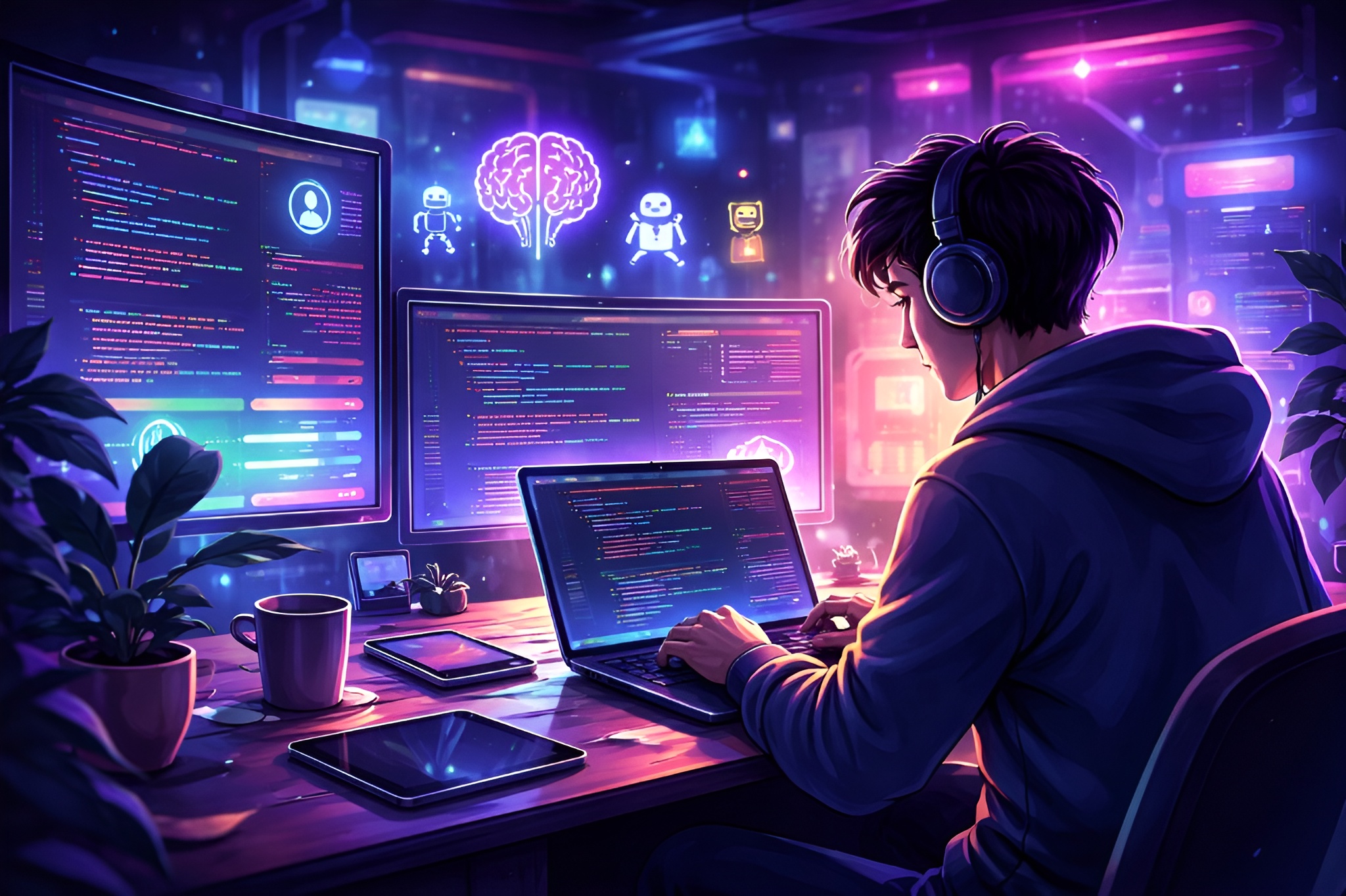
A typical vibe coding session in 2026:
- Open IDE
- AI copilot running
- Describe intent in natural language
- Accept generated code
- Modify by intuition
- Run, test, adjust
- Move forward
No deep Googling.
No tab overload.
Just forward motion.
This is why many developers say:
“I don’t search anymore. I just build.”
Tools That Enable Vibe Coding
Vibe coding is impossible without the right tools.
Core enablers:
- IDE-integrated AI copilots
- Inline explanations and refactors
- Natural language to code workflows
- Instant feedback loops
What matters most is speed + context, not perfect accuracy.
How Developers Search Differently Now
Here’s the key shift.
Developers no longer ask:
“How do I do X in JavaScript?”
They ask:
“Fix this function”
“Refactor this”
“Why is this failing?”
Search moved:
- From browser → editor
- From keywords → conversation
- From links → answers
This is where your earlier Google-vs-rivals content fits perfectly.
Google vs AI vs Communities (Where Your Original Content Fits)
For vibe coders, discovery now looks like this:
- AI inside IDE for immediate answers
- Communities for edge cases and opinions
- Traditional search only when AI confidence drops
Google still dominates volume, but it no longer dominates developer attention.
That’s why:
- AI answer engines matter
- Desktop behavior matters
- Zero-click answers matter
This is not the death of Google.
It’s the decentralization of developer search.
Why Bing and AI Answers Matter More Than You Think
Many vibe coders work in:
- Enterprise environments
- Corporate laptops
- Locked-down systems
In these cases:
- Bing defaults matter
- AI-powered answers surface faster
- Fewer ads improve trust
That’s why Bing traffic often converts better in dev-heavy B2B industries.
The Hidden Risk of Vibe Coding
A 100/100 article must show balance.
Vibe coding can fail when:
- Developers over-trust AI output
- Fundamentals are skipped entirely
- Debugging becomes trial-and-error
- Architecture decisions are deferred too long
Good vibe coders:
- Use AI to move fast
- Pause to understand critical paths
- Refactor intentionally
- Validate assumptions
Vibe coding works best when paired with judgment.
Best Practices for Sustainable Vibe Coding
If you want vibe coding without long-term pain:
- Use AI for scaffolding, not blind copy
- Read generated code before shipping
- Ask “why” after “what works”
- Keep tests close
- Document decisions briefly
Vibe coding is a multiplier, not a replacement for thinking.
Why This Matters for the Future of Coding
The most important shift isn’t technical.
It’s behavioral.
Developers now expect:
- Answers, not links
- Context, not tutorials
- Speed, not ceremony
Platforms that support this win attention.
Platforms that slow it down get bypassed.
Final Take: What This Really Means
Vibe coding is not a trend.
It’s a response to friction.
Developers didn’t abandon search because Google failed.
They moved because asking became faster than searching.
In 2026, the best developers don’t look things up.
They build, test, adjust, and move forward.
That’s vibe coding.